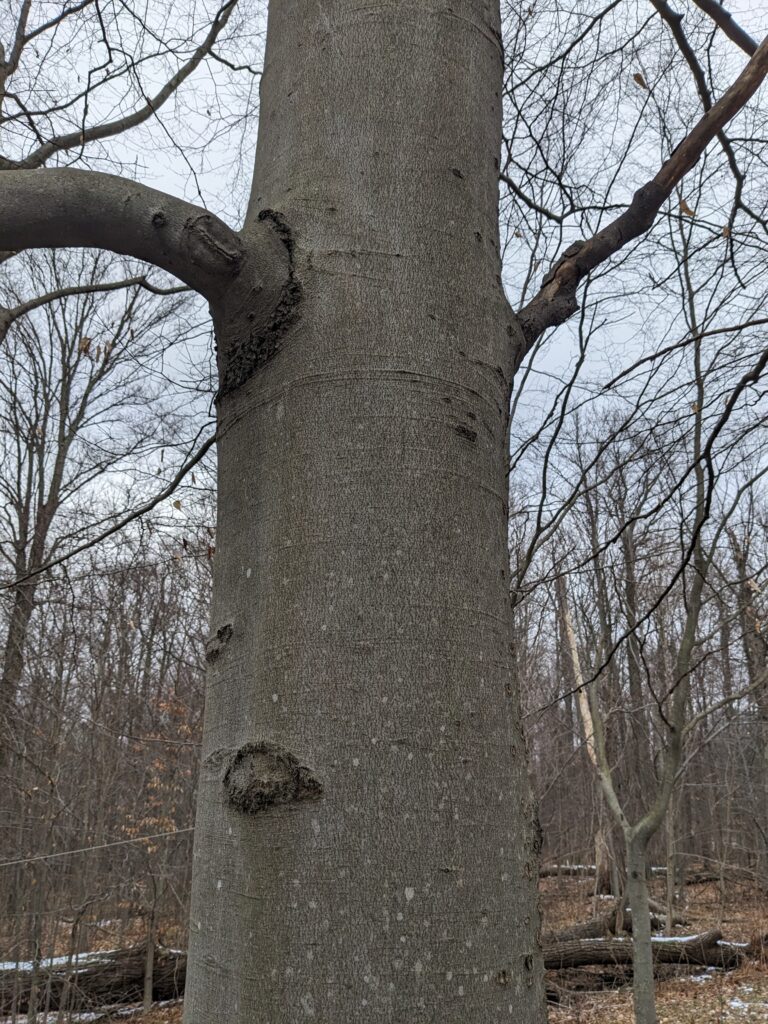
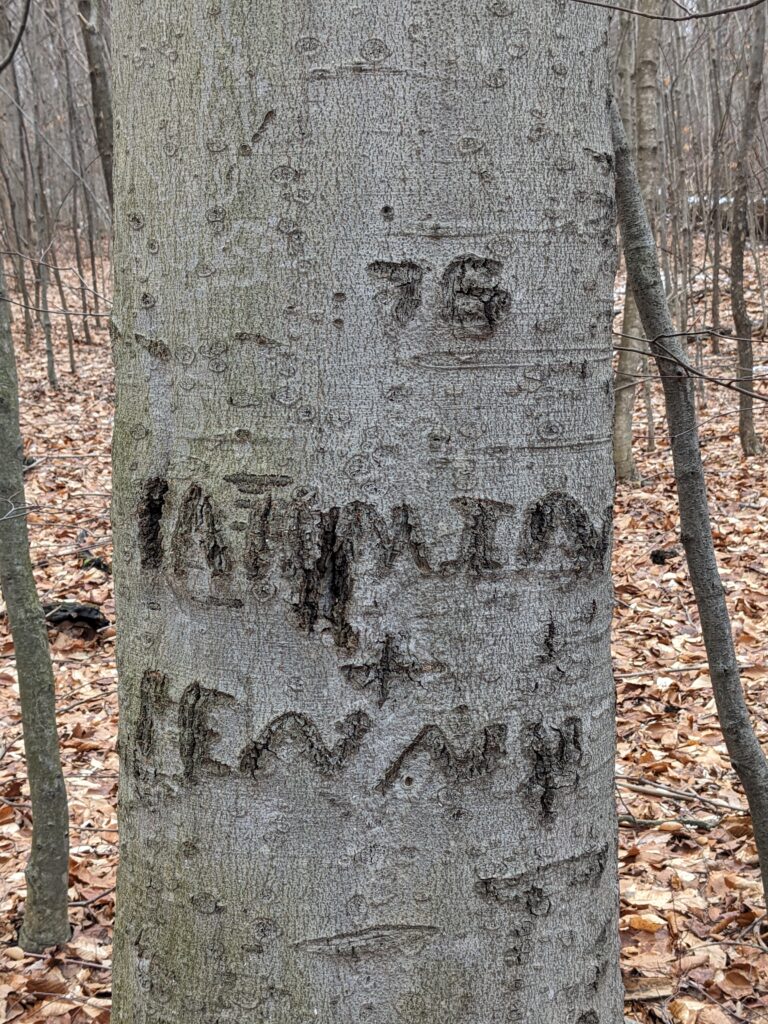
The forest here is dominated by beech trees. Usually, they have very smooth light gray bark as in the photo above. They are also magnets for people carving their names into trees like in the example below (76 ? + Penny, I am not sure about the first name but apparently the carving has been there for over 47 years).
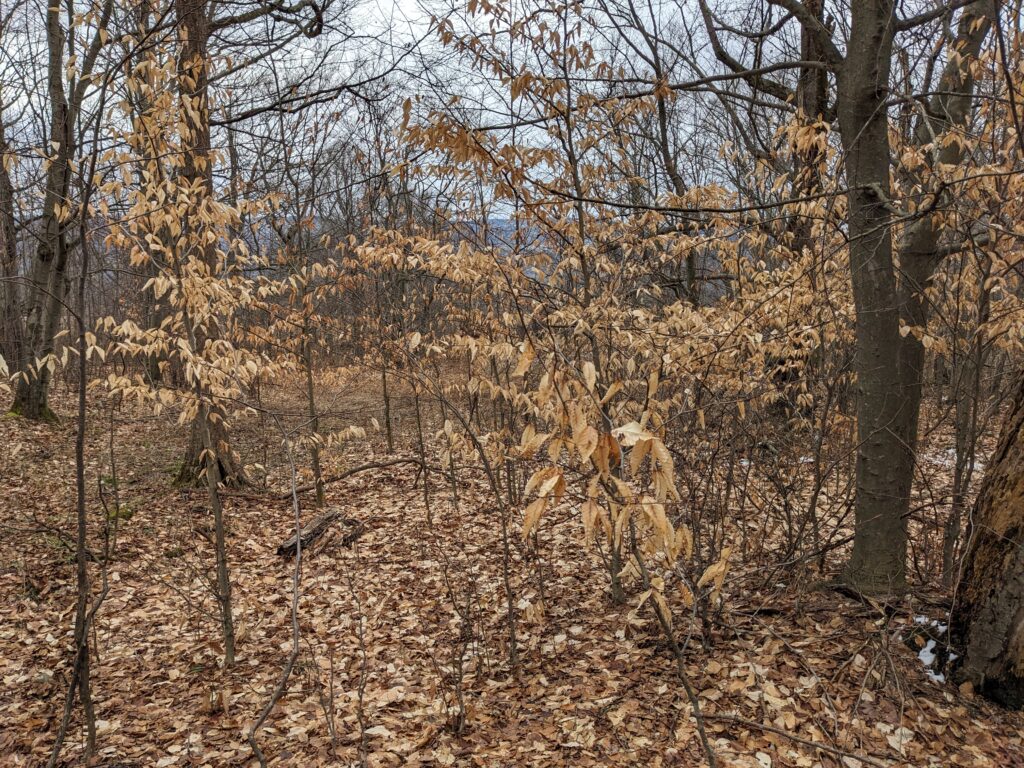
The leaves tend to stay on during the winter.
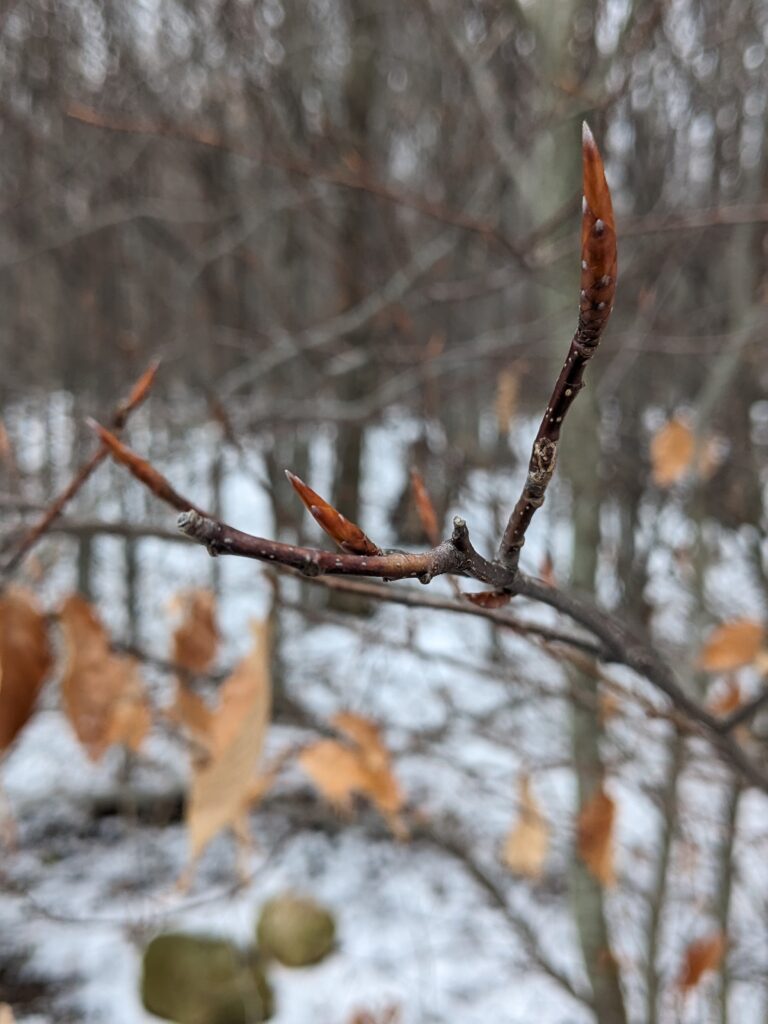
The tree is also recognizable from its long spiky buds.
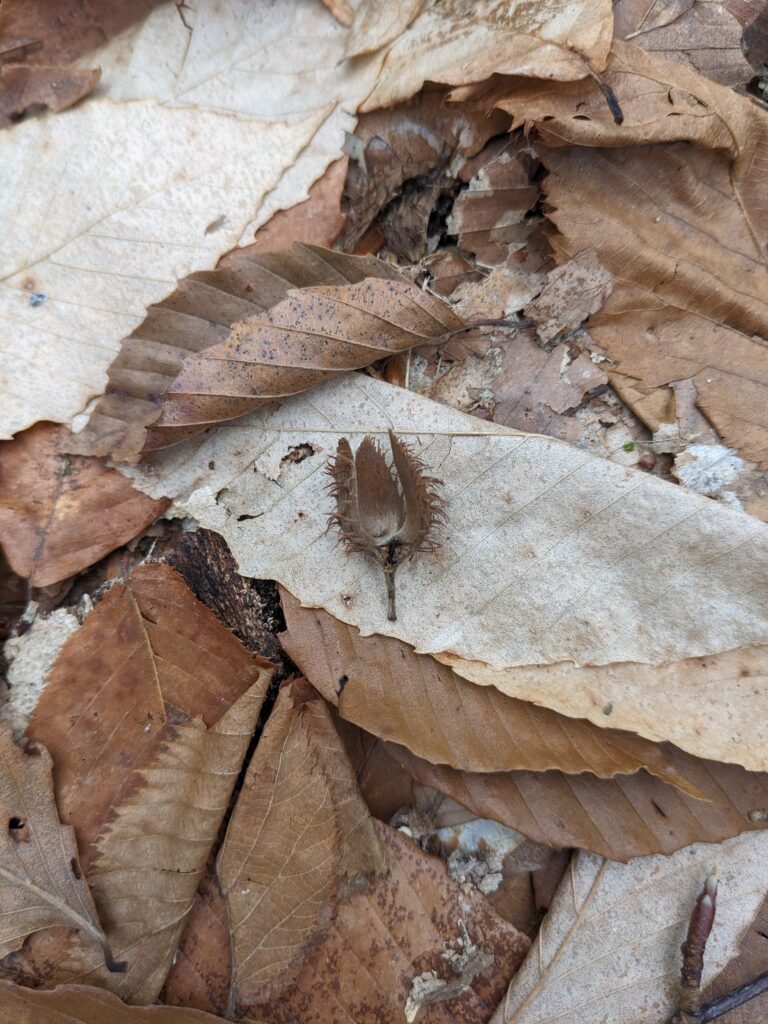
The tree is the source of beech nuts. They are small so you may have to look for them but here is a beech nut husk on some beech leaves.
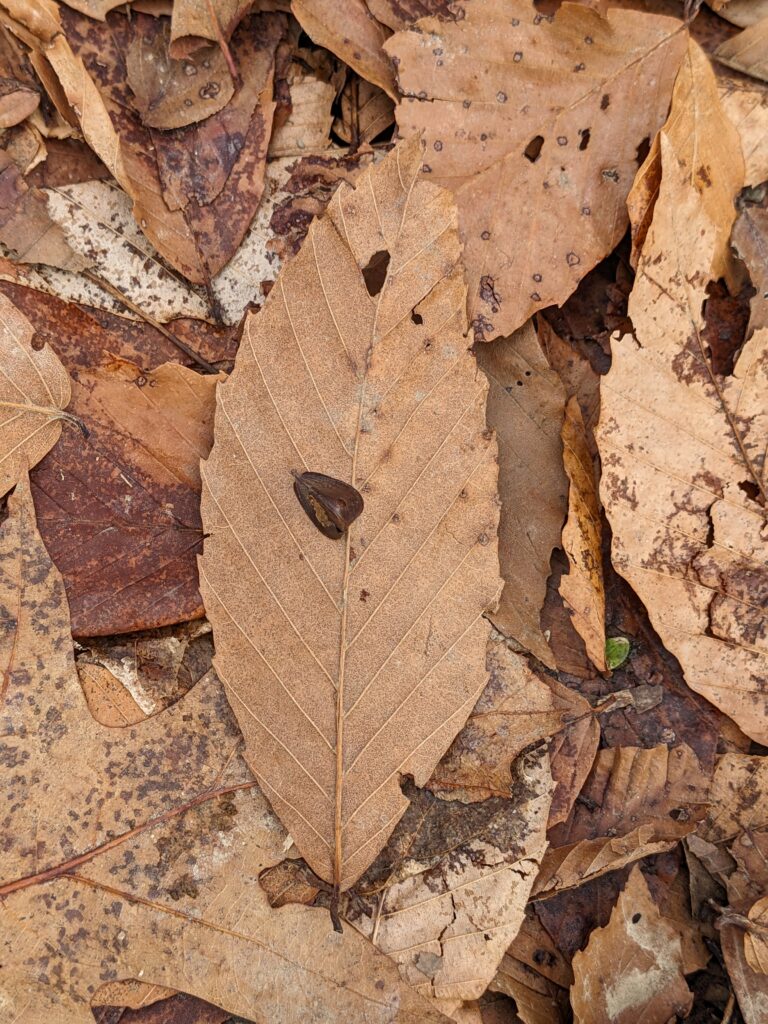
And a trilobed beech nut.
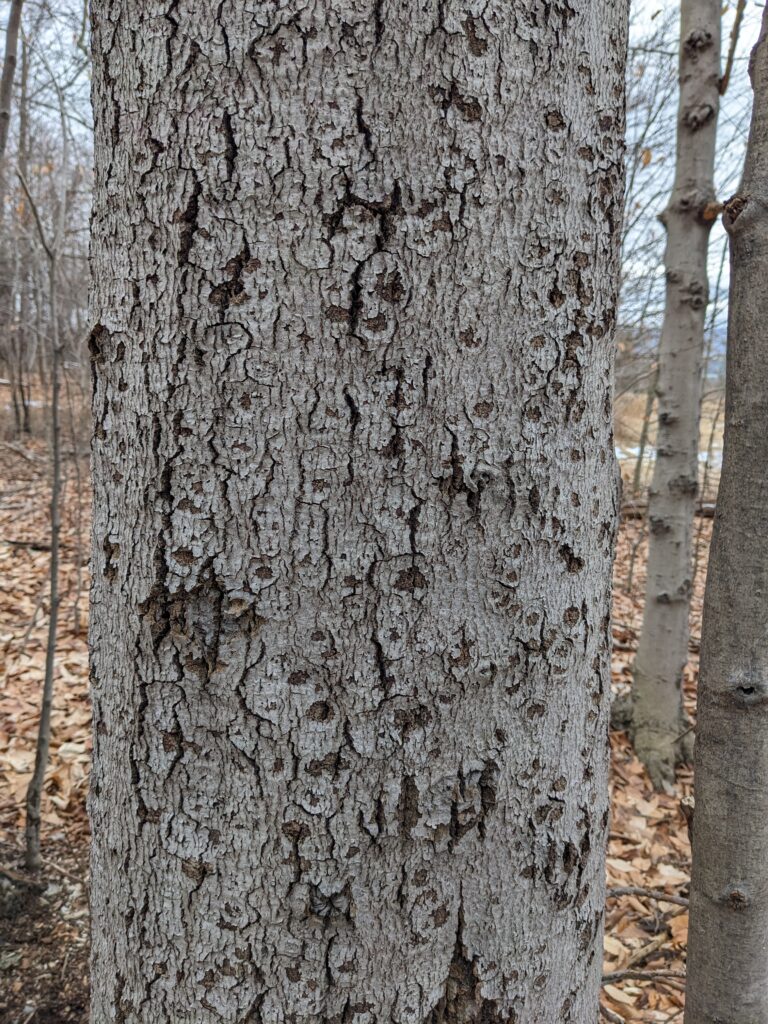
Unfortunately, there are (at least) two diseases killing American beech trees. One is a bark disease and another a leaf disease. Many of the trees here no longer have the smooth bark, rather it is pockmarked and doesn’t look like what we would otherwise expect.
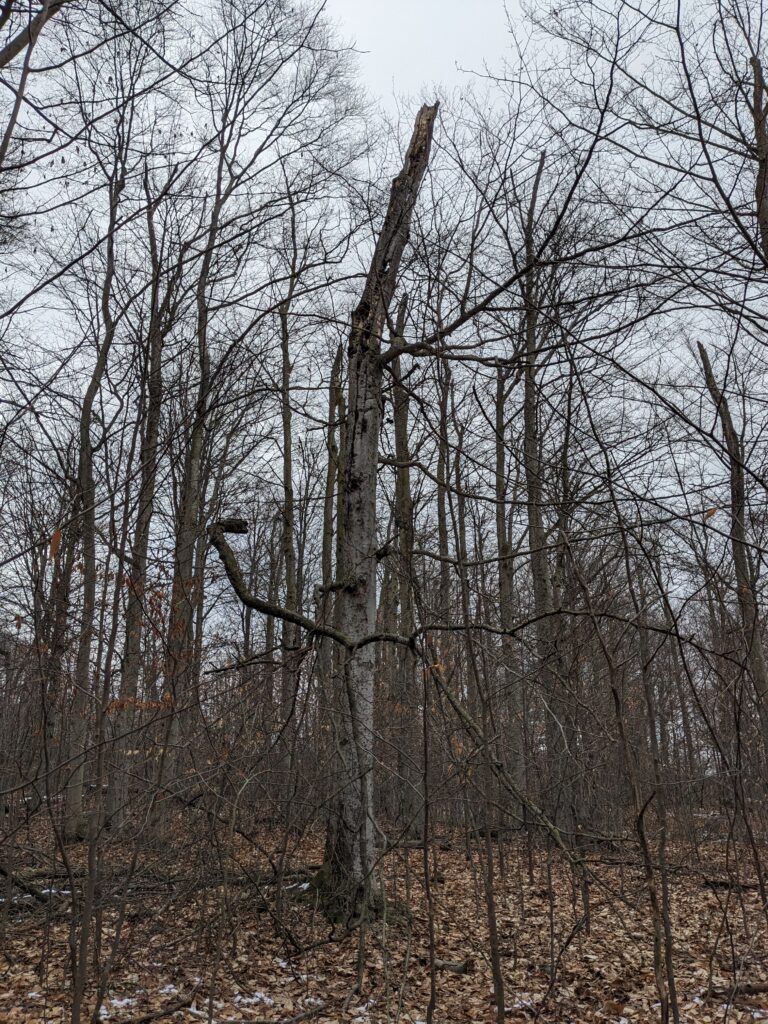
This is killing the trees and the forest here has many “dead top” trees.
The problem is that beech readily sprouts from the roots. Especially if the parent tree is dying. This leads to thick stands of “beech brush” that shade out other trees and prevent them from getting established.
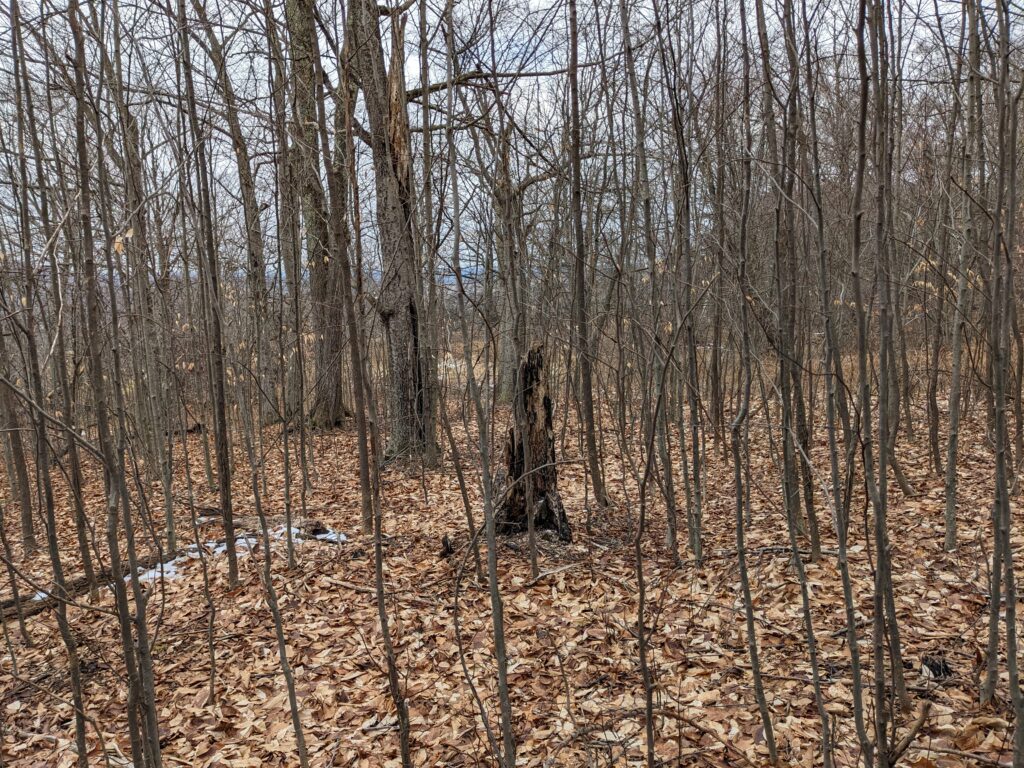
The beech wood itself is not really valuable, it rots easily compared to other hardwoods but can be used for firewood. My general plan is to leave a lot of the large trees. The dead tops provide habitat for a lot of animals and it is dangerous to cut a tree with large dead limbs in it. However, I want to cut as much of the beech brush as reasonably possible and plant other species to eventually replace them. Last fall we collected shagbark hickory nuts and chestnut oak acorns and put them in the refrigerator just for this. I plan to post some updates on how it goes.
Links:
- YouTube video “Tree Talk: American Beech” by Forests for the Bay, https://www.youtube.com/watch?v=rdXzeHBlEEw
- https://en.wikipedia.org/wiki/Fagus_grandifolia
- https://en.wikipedia.org/wiki/Beech_leaf_disease
- https://en.wikipedia.org/wiki/Beech_bark_disease
- https://www.science.org/content/article/mysterious-disease-striking-american-beech-trees
- https://www.science.org/content/article/beech-leaf-disease-ravaging-north-american-trees
Leave a Reply